Every day from December 1, 2016 through December 25, 2016 I'll be posting and discussing the origin, history, meaning, and music of one relatively obscure traditional Christmas song per day. Hopefully this will serve as a respite from the nausea of hearing some Bing Crosby song you're sick of for the umpteenth time.
Today is a milestone in the short history of this blog: as of this post, I've officially made it past the halfway mark in my list of obscure Christmas songs. It's the small victories that mean the most. I don't have any plans for running out of steam on these, but I am going to keep this one fairly brief, as there's not a ton to say about it. "Past Three O'Clock" is a nice, jolly, carol born out of that carol-manufacturing plant of jolly old England.
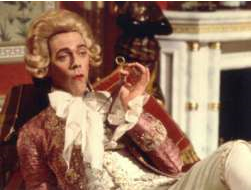
The world's classiest people
The exact date of origin is a little unclear, as far as when the carol was written. It was for sure published in the 1924 collection A Cabridge Carol Book, co-edited by the same man who wrote the lyrics, George Ratcliffe Woodward. Woodward was also responsible for the more widely popular "Ding, Dong, Merrily on High," which I think bears some musical resemblance to "Past Three O'Clock." Both carols obviously predate the publishing date of said collection, but by how much is unknown. Since he was born in 1848 I like to imagine this being the product of the Victorian era, whose Christmases are forever preserved in miniature towns set up on coffee tables throughout the world, without a single outhouse or chamber pot in sight, I might add.
Also no Godzilla... yet...
But I digress. And I'm allowed to, it's my blog, but I promised to keep this brief. The refrain and the tune both date back to sometime in the mid-17th century. The name of the tune is "London Waits;" Woodward adapted the lyrics to fit it. Evidence of the refrain in the lyrics can be found in a 1665 poem, and are often re-quoted, in that the refrain is an adaptation of a nightwatchman's call at the top of the hour:
Past three o'clock,
And a cold frosty morning,
Past three o'clock,
Good morrow, masters all!
The rest of the lyrics are really fun to read, and follow the same format as the refrain, but there's upwards of 8 verses, so I'm not going to dig into them. Listen to the song, look up the lyrics for yourself if you want to, and enjoy!
If you watched the video above, you probably couldn't understand the language. I'm operating under the assumption that the majority of people reading this can't speak Spanish, but even those who can might have been confounded. That language is Catalan, the language of Catalonia and the native tongue of today's carol, "Fum, Fum, Fum" (pronounced "foom"). Where exactly is Catalonia? I'm glad you asked!
Right there.
Catalonia, as you can see, is a region of northeastern Spain (and historically southwestern France) that retains its own language along with that of Spain. However, Catalan shares more in common with French than it does with Spanish, resulting from a long string of historical happenings that I have no intention of using to drag this post out. All we need to know is that Catalonia is considered the largest, non-state, bilingual community in Europe (before you cry "big deal," consider the divvying up of the Balkans and think that Catalonia has all of them beat). More importantly, Catalina Island, which is where I was hoping the language originated, does not have its own language. Other than, you know, foul language.
NSFW (duh)
Alright, enough linguistics and dumb jokes. Back to business. "Fum, Fum, Fum" is a bit of a doozy of a carol to find much historical data on, since there seems to be no consensus as to exactly who wrote it or when it was written. Most of the other carols I've looked at here at least have theories as to the "who?"; this one only has a theory as to the "when?" The best guess that anyone has regarding the originating date places it sometime in the 16th or 17th century. As it happens, the early 16th century was the beginning of the end of Catalan's height as a common language in Europe. Beginning in 1137 with the merger of the County of Barcelona with the Kingdom of Aragon, what's known as the Crown of Aragon was a powerful early medieval empire of the western Mediterranean, the main language of which was an early Catalan. In 1479 The Crown of Aragon began a slow process of merging with other Spanish nation-states and its language, diluted by Spanish and French dialects, began to fade away. It's probable that the historical guesstimate of the 16th-17th century derives from that being the time when the largest number of people would have spoken Catalan, but it may just as likely have come from even earlier. My surface-skimming research isn't about to go down that rabbit hole, though.
As to the lyrics, the obviously original ones rhyme and work in their native tongue, but they seem to translate poorly to English. Several English versions are out there floating around, the most popular ones being these:
Version 1Version 2
On December five and twenty, On this joyful Christmas day
Fum, fum, fum (refrain) Sing fum, fum, fum (refrain)
Oh, a child was born this night, For a blessed babe was born
So rosy white, so rosy white Upon this day at the break of morn
Son of Mary, virgin holy In a manger, poor and lowly
In a stable meek and lowly Lay the son of God, most holy
Fum, fum, fum Fum, fum, fum
Here, have a listen to one of our best choirs giving it a go:
Personally, I wish I could understand Catalan if only to get a clearer picture on the original lyrics, because even the best English translations we have just seem... basic, at best. The flare that the Catalan language probably brings to the song is lost and we get what I think is a fairly bland set of words to go with such a lively tune. Except, of course, for that elephant in the room: what's a fum?
There are two prevailing theories that attempt to answer that question. One is the literal linguistic route, which states that "fum," translated literally, means "smoke" and that the lyrics refer to the Catalonians gathering around their fires in the wintertime to sing Christmas songs. The other is that "fum" is an onomatopoeia for the sound of either a guitar (Iberian in origin), a drum, (ahem) or a rocking cradle, presumably for the baby Jesus. All good theories, each as likely as the others. As such, I'm taken with not just the relative obscurity of this carol, but it's far more obscure background. Maybe there was an answer in an old dialect of Catalan that was lost when the Crown of Aragon fell apart. I like to think that the Catalonians have some idea, and that they're just the best secret-keepers in the world. Let them keep their secrets; we have their awesome Christmas song.
Is there a central character from the Nativity more glossed-over than Joseph? I get it, he wasn't really Jesus' father, if you're firm in your faith anyway. But he still got all the responsibilities of helping to raise an infant and none of the credit for helping bring the King of the Jews into the world, and keeping him alive --against all odds--into adulthood. And then, at least in the text of the Bible, he just kind of fades into the ether sometime in that obscure period of Jesus' adolescence. What a raw deal! Today I'm set on making sure that Joseph gets his 2-cents in with the unfairly obscure medieval "Cherry Tree Carol."
"I'm getting too old for this shit."
The roots of this one go way back, further than I've gone on this blog so far, back to some early Christian texts not included in the modern Bible. For as long as it is, it's important to remember that the Bible as we know it is the final cut of many religious accounts that were patched together to form a consensus for the Christian faith. Most of this hashing-out took place in the 4th century, partially at the Council of Nicea in 351, but continued well into the medieval period as more texts were discovered. Many of the texts that didn't make the cut were burned to keep from interfering with the newly-established canon of the religion. The surviving texts left on the cutting room floor are now known as the New Testament apocrypha, meaning "things hidden." One of these is the Gospel of Pseudo-Matthew, which seeks to fill some gaps in the story of Jesus' childhood and which seems fixated on pointing out how old Joseph was compared to Mary. Whether it is truth or fable is a matter of faith and deeper historical digging, but the modern consensus sets its origin around 600 A.D.
The story in Pseudo-Matthew takes place during Jesus, Mary, and Joseph's refuge in Egypt to escape Herod's massacre, with which you're all intimately familiar.According to it, Mary asks Joseph to stop at a cherry tree and pick some cherries for her. Joseph, raising what I think is a perfectly fair point, spitefully tells Mary that the father of the child can come pick the cherries himself, since apparently he wasn't as sold as most biblical characters on the concept of the immaculate conception. Jesus then, in a totally not creepy display, commands the branch of the cherry tree to bend so that Mary can pick the cherries, and then commands it back up when she's done. Joseph witnesses the miracle and, while certainly creeped out, rescinds his words and accepts that Jesus is the son of God.
"...Jesus..."
You said it, Dude. Eventually the story somehow morphed into taking place during Mary and Joseph's trip to Bethlehem, during which time Joseph was less than enthralled with his new wife's pregnancy (there's biblical evidence for that one). In this version, and in an even less creepy display, Jesus commands the cherry tree to bend from inside the womb. This is the basis for the lyrics to "The Cherry Tree Carol."
The carol itself traces its roots back to a cycle of English "mystery plays," another concept with which you are all intimately familiar. The plays which featured "The Cherry Tree Carol" are called the N-Town plays, with N-Town thought to be short for Norfolk (not to be confused with Coventry) where the plays were performed annually in the late 15th and early 16th centuries. The original manuscript of these plays survives today, and it includes the lyrics to "Cherry Tree" as part of Play 12: Joseph's Doubt about Mary. As to the tune, its origins are more ambiguous, and the lyrics have been set to quite a few over the past five centuries. Francis James Child included "Cherry Tree" as ballad #52 of 306 in his famed The English and Scottish Popular Ballads. The fact that these are called "The Child Ballads" after a man and not in reference to them being children's songs comes as news to me. Americanized versions (such as the one up top) of many of these old English ballads were discovered well-preserved in Appalachia, and recorded by Cecil Sharp in the early 20th century.
However, England is without at doubt the popular home of this carol, and so I'll leave you with a distinctly English version, and the most widely-accepted arrangement of the tune, from King's College Choir:
It's Saturday, arguably the best day of the week, so I have no intention of spoiling it with a heavy song. Instead, today I'm looking into the more under-sung than unsung carol "Bring a Torch, Jeanette, Isabella." This carol is one of the more innocent ones that exists, in that it's not just about being quiet around Jesus, but it also isn't weighed down by the burdensome religious undertones that I feel rob some perfectly good Christmas songs of their merriment. Nope, this one is just telling everyone to shut up for a second, Christ! (literally.)
"Bring a Torch" takes us back to the region of Provence in southern France, which is also the birthplace of "Farandole," which I talked about last Sunday. The people like to sing and dance, gotta give them that. In fact, the tune to which the song is sung is a traditional medieval dance tune. Listening to the song you can pick up on the lively, swinging waltz-like feel of it, stemming from it's time signature of 3/8. It's old enough that whoever wrote it, if it was one individual, has long since been lost, but it comes from no more recently than the 14th century. The consensus seems to be that the tune is derived from an air entitled "à boire Qu'ils sont doux, bouteille jolie," and I have no idea what that means. Marc-Antoine Charpentier, a renowned 17th century French composer is often credited with arranging the tune as we know it today, but that is subject to quite a bit of debate, as I came to find.The first record of the lyrics (written in French, obviously) come from a 1553 compilation of Christmas music called Cantiques de Premiere Advenement de Jesus-Christ, apparently assembled by an anonymous Provence nobleman.
*Author's interpretation of said anonymous nobleman,
some liberties taken
Who is responsible for the lyrics, then? That, as it happens, is a very difficult question to answer and sent me down a bit of a rabbit hole in my research for this post. There are a handful of possible authors for the "original" lyrics, ranging in time frame from the mid-17th century up to the early 20th century, but I can't seem to find anything close to a definite answer. The most common English adaptation of the carol is by E. Cuthbert Nunn, who translated them sometime in the late 19th century (he was born in 1868, so definitely no earlier than 1890). That seems to be his one and only contribution to music history, as any research on his life just leads back to "Bring a Torch."
Regardless of their origin, the lyrics describe two milkmaids, Jeanette and Isabella (yes, two people, not one) who went to the stable to milk cows but instead found Jesus in the manger. They ran back to Bethlehem to get torches and bring the townspeople down to see him, but insisted that everyone stay quiet so that the baby could sleep. It's rumored that French painter Georges de La Tour was inspired by the song to paint his piece Le Nouveau-ne (The Newborn) which depicts two unnamed young women holding a baby.
Is that Jeanette and Isabella with Jesus? Maybe. It certainly fits the description. To this day it's a tradition in Provence for children to carry torches and candles to church on Christmas Eve. If we got nothing more from the carol than religiously sanctioning kids to play with fire I think that would be enough. I think the most important thing I'm taking away from all this is that it's clearly Jeanette, Isabella, not Jeanette-Isabella. And like I said at the beginning, this is a nice light-hearted tune with no extra baggage tacked on to weigh down your soul. It's pretty and happy and deserves a bit more airtime, I think.
Yesterday I tackled some pretty heavy stuff, and though I'm not one for sugar coating history (or music) I wanted to switch gears for today's entry and offer something genuinely light and all around cheerful. And what's more cheerful and light than a Christmas-themed Irish reel? Today's post should be comparatively brief, since this is my first purely instrumental song that I've examined. "Christmas Eve" is a 20th century fiddle tune written by the Galway fiddler Tommy Coen in the early 1950's, hence its other name, simply "Tommy Coen's." The version above, by American old-time fiddler Bruce Molsky--one of my favorites-- is a very Americanized version of the reel, featuring Bob Carlin on clawhammer banjo, and is far enough removed musically from the original reel that you could almost argue it's a different tune altogether. For anachronistic reasons, here's a more "traditional" Irish version:
Generally speaking, there are three families of Irish fiddle tunes: jigs, hornpipes, and reels. A jig is in 6/8 time and has a "bouncing feel to it, like if you were to say "diddle-dee, diddle-dee." There are also slip jigs, which are in 9/8 time, but they're too confusing for me to explain. A hornpipe is played in 4/4 time and accents the one and three beats, so it swings: "ONE, and-a-two, and-a-THREE, and-a-four..." Reels are also in 4/4 time but don't feature any hard accents. If you say "double-decker, double-decker" you get the basic feel of a reel. All are actually names for dances that were adopted by the tunes played for those dances. Now go wow everyone at your local "Irish pub" when they put on the atmosphere music.
Make sure to order a traditional Irish drink.
So what makes "Christmas Eve/Tommy Coen's" a Christmas tune? There are two prevailing theories as to the name. One is simply that the tune was played on a local Galway radio station on Christmas Eve 1955, and since Tommy didn't officially give it a name (beyond his own) people who heard it simply referred to it as "Christmas Eve." The other is that another Galway band leader who didn't like Coen had his reel in a set list near Christmas. When he told people the tune names before each song he decided not to mention Coen to irritate him, simply pulling the name "Christmas Eve" out of his ass.
Beyond the name, there's really nothing especially Christmas-y about the tune. Honesty if it never got that moniker it would probably have remained a normal reel with no association with the holidays. But as it is, we have that name, and so Irish bands and jams like to play this one around Christmas, and it's become known as one of the few Christmas fiddle tunes. But I like it, and apparently not many people know about it, so here it is on the list.
I've successfully made it a full week of posting every day! We're getting pretty deep into December now... the days are still growing a little darker with each passing one, the airs blowing a little colder, maybe I'll even see a little snow before this weekend is out. And with the darkening of the days comes a darkening of the songs. And the beers. Actually, mostly the beers, but for today's purposes the song is probably dark enough to cover that base for the entire rest of the holiday season. Let's get right down to brass tacks and tackle the beautifully brutal "Coventry Carol."
This is admittedly one of the more widely known carols that I'm going to cover, but it still deserves a place on the list. There's a damn good reason that you won't hear Gene Autry belting this carol over the radio. If you're like me, you probably heard the music and thought "Well that sounds a little on the melancholy side, but it's still nice" without ever paying attention to the lyrics. Let me give you a sample:
Herod, the king, in his raging
Charged he hath this day
His men of might in his own sight
All children young to slay
Then woe is me, poor child, for thee,
And ever mourn and say
For thy parting neither say nor sing
Bye bye lullay, lullay
"Jesus..."
You said it, dude. "Coventry Carol" is sung from the perspective of a mother mourning for her child who is about to be murdered. If you're not up on your biblical history let me give you a quick rundown on the "Massacre of the Innocents." King Herod was the Roman-appointed governor of Judea, and he wasn't known for his mental stability. According to the Bible, after hearing word of the birth of a new King of the Jews in Bethlehem, he feared that the "king" would come to take his throne. To prevent this, he ordered that all male infants under the age of two be killed. Jesus survived, according to Matthew, thanks to Joseph hustling his wife and child to Egypt, where they remained until Herod's death. The gospel of Matthew is the only book in the Bible that describes the Massacre of the Innocents.
Obviously "Coventry Carol" comes to us from a bit more recent time than that, but not by a whole lot. This is one of the few religious carols that exists today with such ambiguous roots. We know that it was sung as a part of a medieval "mystery play" called The Pageant of the Shearmen and Tailors, which was one of ten "mystery plays" that were performed annually in Coventry, now West Midlands, England. The earliest known performances of these plays place their origin in the late 14th century, and we know they continued annually for 200 years. Unfortunately, "Coventry Carol" is the only surviving musical number from the two out of the original ten plays that there is record of. The Pageant of the Shearmen and Tailors depicted New Testament stories from the nativity through Herod's massacre, so it's inferred that "Coventry Carol" was a closing number. The tune to which it's sung we do have an absolute point of origin on: it was written in 1591 by a composer named Thomas Mawdyke, and that is the music we know today. The version of the lyrics we have date from 1534, as transcribed in an "edition" of the play, by Robert Croo (or Crowe), the manager of the pageant at the time. His manuscript was transcribed by the antiquarian Thomas Sharpe in 1817, and again in a second edition in 1825. The centuries-old manuscripts had decayed with time, and he was unable to transcribe anything except for Shearmen and Tailors, and even then only one carol. The remaining manuscripts were lost in a fire in 1879, leaving us with just "Coventry Carol."
Thank god not all art from the era was lost
That was some heavy-duty history, so let's move on to something lighter, namely the reason the carol experienced a renaissance in 20th century England. It began on November 14, 1940, when the Luftwaffe bombed Coventry Cathedral in one of their many blitzkrieg air raids. That year on Christmas day, with the people of Britain still under constant attack from German bombers, the then-provost of Coventry Cathedral, Fr. Richard Howard, delivered a radio address to his congregation throughout Britain. In it he called for the British people not to wish for revenge on the Germans, but instead to seek forgiveness and reconciliation for them, and to use that attitude to help build "a more Christ-like world." The address concluded with the singing of "Coventry Carol" by the choir. The bombed remains of the cathedral were left standing as a memorial to the dead and as a garden of peace. Fr. Howard, in the wake of the bombing, had the words "Father Forgive" inscribed on the wall behind the altar of the ruins.
I think that's what I'll remember when I hear "Coventry Carol" from now on. Not its morose roots, but its modern legacy of forgiveness. And I don't mean to get too preachy here, but 2016 has been a rough year for a lot of reasons, and I don't think I'm out of line in saying that we're living in dark times. It's okay-- we've been in them before and we'll get through them. But all the same I hope the lesson of that broadcast in 1940 is the prevailing one this Christmas. We've got a long way to go, but we can start by finding some room in our hearts for those we're not fond of. Take it from this heathen: if Christ forgave Herod for the Massacre and Fr. Howard forgave the Germans for the blitz, I think I can get behind building a more Christ-like world in the wake of this storm of a year we've just weathered.
Lucky number 7. Today's obscure carol is a return to the American south and its old world Christmas traditions, and as such it has a handful of names ascribed to it. "Star in the East" seems to be the favored modern name, which is technically the name of the tune and not the hymn itself. The lyrics of the hymn were penned under the name "Brightest and Best," and sometimes "Sons (or Stars) of the Morning." Like a lot of the music I'm looking into here, the tune is in a minor key, which I'm really fond of for Christmas music, and as such I'm fond of this song. Today is also Pearl Harbor Day, so I wanted to choose an American carol, one that might have been sung with some apprehension in American churches around Christmas of 1941.
"Star in the East" is usually sung as a shape note song, as it appeared in the 1854 edition of Southern Harmony as hymn #16. Shape note music is a style of musical notation that links a shape with a given pitch and syllable (think "fa, so, la") within a scale. The style is believed to have developed in churches and early music schools in rural 18th century New England as a means of teaching music to students who may not have been literate, let alone able to read music. Shape note singing also promotes congregational participation as it's usually written in 3-part harmony. It remained popular throughout the rural south and Appalachia into the early 20th century, and maintains some limited use in Baptist congregations today. Here's the sheet music to the shape not song "I'm Going Home":
And here's the same hymn sung by The Sacred Harp singers (also the recording used in the movie Cold Mountain):
So now you know what shape note music is! Sometimes it's ambiguously referred to as "sacred harp" singing after the widely reproduced and updated Sacred Harp hymnal, a comprehensive book a shape note hymns similar to Southern Harmony. It's musical power and fullness made it a preferred method of choral singing even for very musically literate congregations. However, the original hymn "Brightest and Best" was not written as a shape note hymn, or in America at all. Its lyrics are by Reginald Heber, an Anglican bishop in England, who wrote it in 1811. The hymn made its way to America and was adapted into shape note music by William Walker, also the author of Southern Harmony, the first edition of which he published in 1835. Walker is also responsible for the tune, "Star in the East," which is the colloquial name for the hymn now in America. It was intended as an Epiphany carol, which is handy in southern Appalachia, as I brought up in December 1st's post. Maybe that's why it caught on so well.
That's not the first of Tim Eriksen that's been on this blog, and I doubt it'll be the last. That's also him conducting the singers in "I'm Going Home." Seriously, if you're at all even the tiniest bit interested in American folk music and its history, or even if you just like good music, you're doing yourself a disservice by not listening to his stuff. Traditionally this song is made to be sung a capella (as with all shape note songs), but he works the melody on his 12-string like that's what it was made for. Lyrically there's not a ton to say about "Star in the East"-- I'm mostly in it for the tune of it, which is to say the American part (hoo-rah). It's pretty standard as 19th century hymns go, but I think the refrain does deserve, at the very least, copying and pasting here:
Brightest and best are the sons of the morning
Dawn on our darkness and lend us Thine aid; Star of the East, the horizon adorning, Guide where our infant Redeemer is laid!
Why "sons" and not "suns" in that first line? There's no readily available source on that which I can find, but it's pretty obvious to me that it's a play on words of sorts, relating Jesus' coming to the sunrise that breaks through the darkness of night. It also seems that the song is written from the perspective of the Magi, which must be what denotes it as an Epiphany carol moreso than a Christmas one. If you're ever bored, look up some other Sacred Harp tunes, especially if the haunting nature of this one speaks to you like it does to me; I don't think you'll be disappointed.